Bank of Korea raises rates as household debt hits record
Rising house prices in and around Seoul could add to household debt, according to the bank.
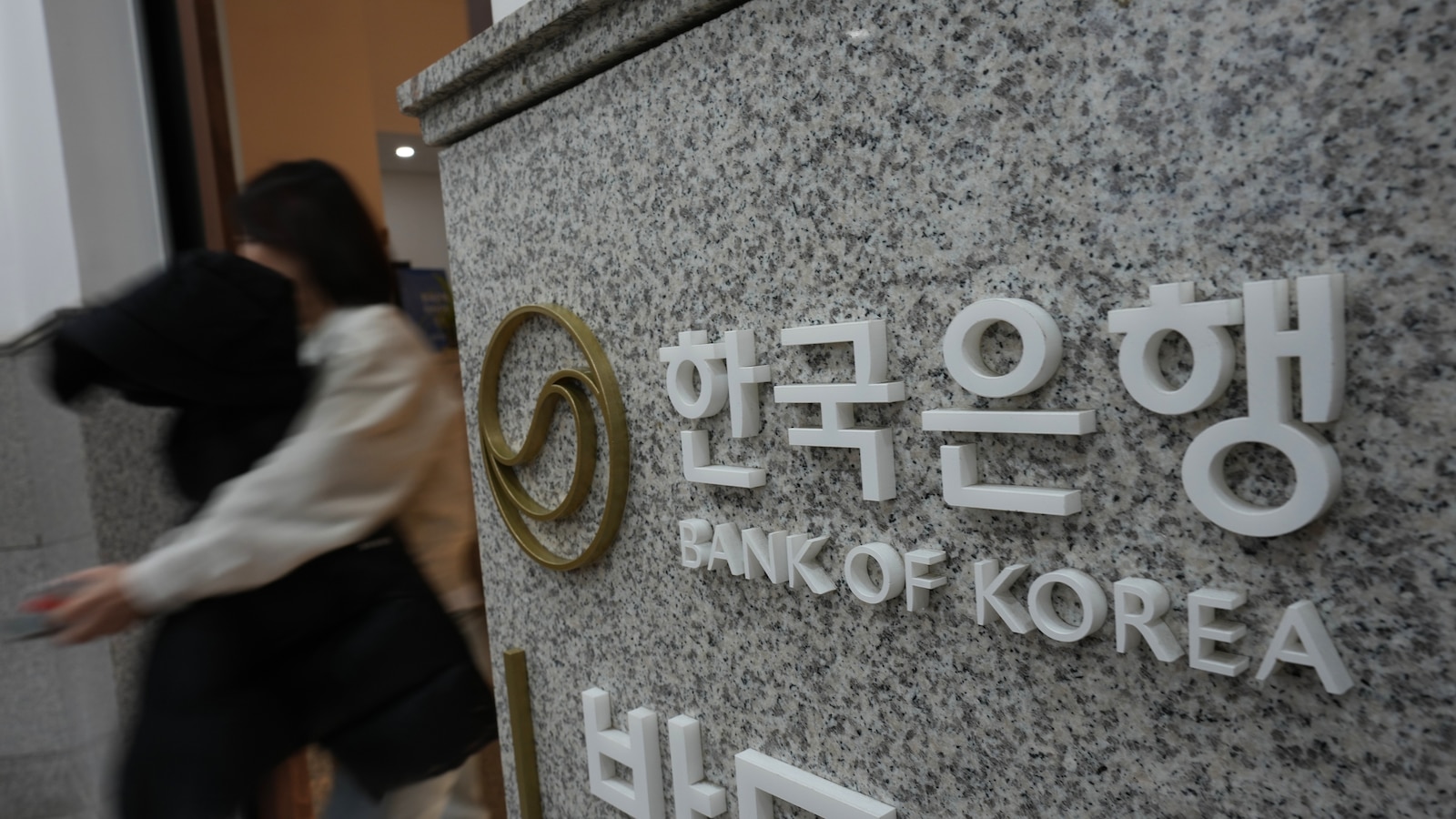
South Korea’s rate increase looks less like a simple inflation move than a test of how much debt households can carry. The Bank of Korea lifted the policy rate to 3.25%, while household debt reached an all-time high as of the third quarter, ABC News reported on Nov. 26.
The pressure reaches households through higher borrowing costs while consumer spending remains subdued. South Korea’s inflation rate stood at 2.8 percent in October, above the BOK’s 2 percent target, Al Jazeera reported on Nov. 26. The bank also cited “persistent risks on the side of financial stability,” ABC News reported on Nov. 26, a phrase that points beyond grocery prices and fuel bills.
The expected increase met opposition on the board. The seven-member monetary policy board voted 5 to 2 to raise the seven-day repurchase rate by a quarter of a percentage point, its highest since November 2024, The Business Times reported on Nov. 26. Reuters had found the decision was forecast by 32 of 34 analysts surveyed, according to the same report, so the surprise is not that the Bank of Korea moved. ABC News reported on Nov. 26 that two members wanted to keep the rate unchanged.
The export side gives the bank economic cover. The Bank of Korea lifted its growth forecast for South Korea’s economy to 3.9% from 3.3% for 2026, and to 4.1% from 2.9% for 2027, ABC News reported on Nov. 26. South Korea’s exports rose 94 percent year-on-year in October to reach $115.3bn, following an all-time monthly record of $120.9bn in September, Al Jazeera reported the same day. Newswav reported on Nov. 26 that South Korea had announced exports had already hit $1 trillion this year for the first time, fuelled by semiconductor demand amid the global AI boom.
A boom in shipments is not the same as broad domestic strength. Analysts have noted that consumer spending has remained subdued because of rising prices, stagnant wages and the burden of servicing South Korea’s high household debt, ABC News reported on Nov. 26. Newswav reported the same day that the central bank expected rising incomes and increased government spending to support a gradual recovery in consumption. For now, subdued spending sits alongside the rate rise.
The debt stock changes the stakes for the Bank of Korea. Rising house prices in Seoul and the metropolitan area could further aggravate household debt of 2,030 trillion won ($1.51 trillion), near the size of the country’s annual gross domestic product, according to the bank’s data cited by ABC News on Nov. 26. Higher borrowing costs add to the burden of servicing that debt while consumer spending remains subdued.
The internal split leaves the rate path unsettled. Board members were almost evenly split in quarterly projections on where interest rates would land in six months, pointing to 3.25 per cent, 3.50 per cent, or 3.75 per cent, The Business Times reported on Nov. 26. The bank also saw stickier inflation for 2027, at 2.4 per cent, up from 2.3 per cent previously. Together, the projections leave open how far rates will rise.
The rates market reacted to the decision. South Korea’s policy-sensitive three-year treasury bond futures fell 0.18 point to 103.83 as at 0335 GMT, The Business Times reported on Nov. 26. After a tech-led sell-off the previous day, South Korea’s stock market rose on Thursday alongside a regional equity rebound, Al Jazeera reported on Nov. 26. The fall in bond futures is a sign that traders marked tighter policy into short-term Korean government debt.
What Would Prove the Bank Wrong?
The case for the hike is stronger than a household-debt warning alone. South Korea’s central bank hiked interest rates as red-hot chip demand drives one of the Asian economy’s fastest expansions in more than a decade, Al Jazeera reported on Nov. 26. Newswav reported the same day that the central bank said a booming chip sector would continue to drive strong export and investment growth. If exports and investment keep carrying the economy, the rate rise can look like restraint imposed from a position of strength, rather than a policy mistake imposed on weak consumers.
The risk falls unevenly. Households with debt face higher borrowing costs: the bank said the increase was necessary because inflation was expected to stay above target for a “considerable period,” ABC News reported on Nov. 26. Domestic retailers and service companies could feel the effects of subdued consumer spending, already noted by analysts in the same report. Short-term Korean government bond holders face risk if yields rise; The Business Times reported on Nov. 26 that policy-sensitive futures had fallen. Exporters tied to chips may benefit if the bank’s forecast of strong export growth holds, while households bear the higher borrowing costs.
The clean test is the next Bank of Korea statement. If it keeps above-target inflation and household-debt risk in the same frame, this rate rise remains a debt-stability move as much as a price move. If that language fades while consumption weakens, the export-boom case has overpromised.
What followsConditional research · not advice
From the storyThe rival case is that the chip-led export boom gives the Bank of Korea room to raise rates without choking growth.3 links later: a hypothesisIf consumer spending lags export strength, household balance sheets become the binding constraint on how far the Bank of Korea can extend tightening.
Why it is not the obvious read
The finding departs from the chip-boom cushion view by locating the next policy constraint in household debt and consumption rather than export capacity.
The Bank of Korea’s decision to lift borrowing costs 25 basis points to 3.25 percent marks the first increase since August and comes with inflation well above its two percent target.
The bank said in a statement that raising borrowing costs was necessary as inflation was expected to remain above target for a “considerable period” and also cited “persistent risks on the side of financial stability.”
AssumesThe higher benchmark rate passes into borrowing costs faced by indebted households.
After the rate increase, indebted households would face higher debt-service pressure if the higher benchmark rate passes into borrowing costs.
Despite the robust performance in trade, analysts have noted that consumer spending has remained subdued due to rising prices, stagnant wages and the burden of servicing South Korea’s notoriously high household debt.
AssumesDebt-service pressure affects household spending before export strength feeds broadly into household incomes.
If higher debt-service pressure reaches households, the recovery in consumer spending would lag the export and investment strength described by the central bank.
The split vote and divided rate projections show the Bank of Korea has not settled how far this tightening cycle should run.
AssumesA lagging consumption recovery matters enough to influence a still-divided rate path.
BottleneckIf consumer spending lags export strength, household balance sheets become the binding constraint on how far the Bank of Korea can extend tightening.
The bottleneck
The split vote and divided rate projections show the Bank of Korea has not settled how far this tightening cycle should run.
Who is exposed
It warned that the rising house prices in the capital Seoul and the metropolitan area could further aggravate the country’s household debt, which reached an all-time high of 2,030 trillion won ($1.51 trillion) as of the third quarter, nearing the size of the country's annual gross domestic product, according to the bank’s data.
What to watch, how long it must last, where it breaks
What to watch
- Link 1
Household loan-rate and debt-service data move after the Bank of Korea rate increase.
- Link 2
Consumer-spending data remain subdued while export and investment indicators stay strong.
- Link 3
Bank of Korea communication gives more weight to household debt or consumption than to the chip-led export boom when discussing the policy path.
How long it must last
- Link 1
By the next Bank of Korea household-debt or financial-stability update.
- Link 2
By the next consumption and export data releases.
- Link 3
By the next monetary policy decision and rate-projection update.
Where it breaks
- Link 1
Household borrowing costs do not rise after the benchmark rate increase.
- Link 2
Consumer-spending data improve alongside export and investment strength.
- Link 3
Bank of Korea communication frames export strength and inflation as sufficient reasons to extend tightening without adding weight to household debt or consumption.
What would change it. The reading weakens if the next statement drops the debt and financial stability language, or if projections move toward lower rates while consumption stays subdued.
Sources
abcnews.com Nov. 26The Business Times Nov. 26Al Jazeera Nov. 26newswav.com Nov. 26
27 statements, each tied to its sourceWhat each statement rests onHow ARCANE checks a story