Chinese exchanges will lower margin requirements for stock buyers
The planned margin and fee cuts could ease costs for investors buying shares on credit, while the Shanghai and Shenzhen exchanges would collect lower fees.
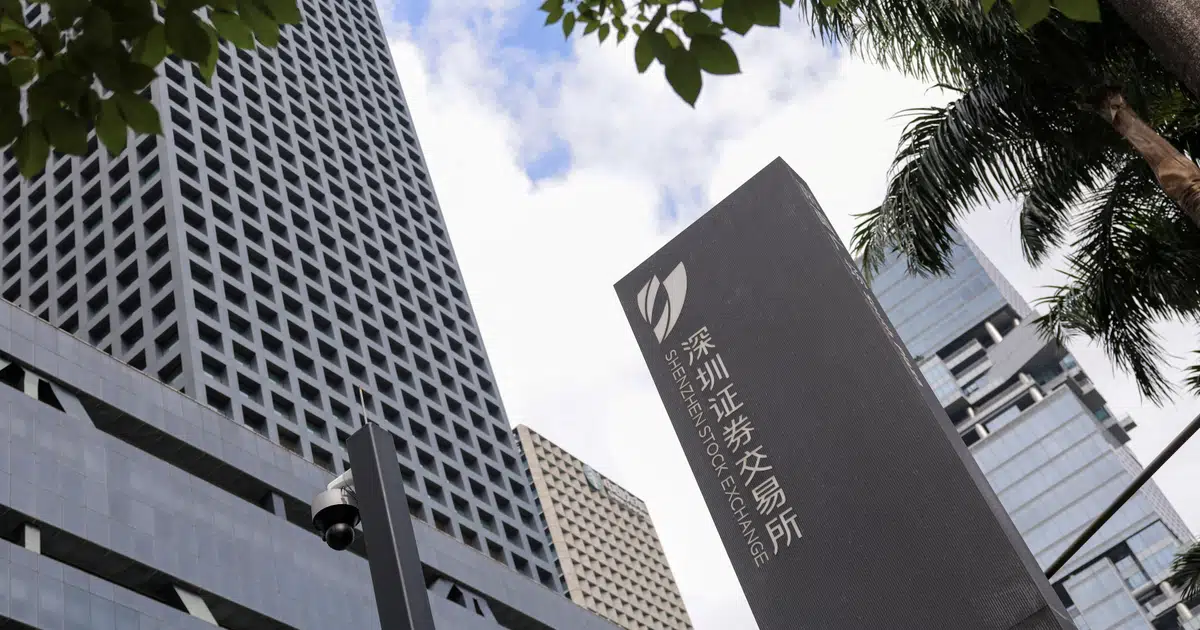
Investors will need less of their own money to borrow for stock purchases under China’s planned margin change, China Daily reported on Nov. 22. The adjustment will cover new and existing contracts.
The move changes who supplies the next burst of demand. China Daily reported on Nov. 22 that the adjustment applies to new and existing margin purchase contracts, so investors need less of their own funds when financing stock purchases. The Standard reported the same day that industry estimates expect fresh liquidity to be unlocked, while existing contracts would release capital tied up under the old rule.
Outstanding margin loans have fallen from a late-June peak of three trillion yuan to roughly 2.2 trillion yuan, Business Times reported on Nov. 22. Industry estimates cited by The Standard put the liquidity expected from the lower margin requirement at around 400 billion yuan. That estimate is smaller than the decline in outstanding loans, though the two figures measure different things.
The first winner is the investor who was already close to borrowing. The Standard reported on Nov. 22 that the lower margin ratio would reduce costs for new margin positions and unlock capital tied up in existing margin contracts. A household owning Chinese shares would see the relief only if that cheaper financing supports share prices rather than simply allowing the same buyers to use less cash.
The second winner is the trading system around those buyers. Business Times reported on Nov. 22 that the Shanghai and Shenzhen exchanges announced fee cuts to lower trading costs, boost confidence and invigorate the market. The Standard reported that the Shanghai Stock Exchange’s measures cover waived trading unit fees and reduced or exempt data center service fees, while Shenzhen will cut trading unit, online voting, trading communication and data center charges.
Those cuts make the exchanges participants in the support effort, not just rule writers. If lower fees draw activity back, trading venues give up some charges in exchange for more turnover and a stronger market tone. If activity stays weak, the fee relief becomes a cost with little offset, which is the institutional exposure in the package.
Stocks in three Chinese technology indexes have lost a combined $1.7 trillion in market value since the end of June, according to Bloomberg calculations cited in a Nov. 22 report. The margin cut comes against that decline, but a recovery is not assured.
Shenzhen has proposed a second route into the same problem. China Daily reported on Nov. 22 that the Shenzhen Stock Exchange released draft measures to bring market-making trading to the ChiNext market, a move deemed to help add liquidity, reduce stock price fluctuations and improve pricing efficiency. Those potential benefits depend on the draft measures becoming more than a proposal.
Reuters reported through MarketScreener on Nov. 22 that China’s three main stock exchanges announced plans to aid struggling share prices with measures including easier requirements for margin financing. That account fits the broader package, but the official language quoted elsewhere sounds more defensive than euphoric: Business Times reported that the three exchanges said margin financing activity had weakened significantly recently while overall leverage was low.
The repair case is strong because the same lever had moved the other way earlier. The Standard reported on Nov. 22 that the exchanges raised the ratio in January to cool leverage as trading activity picked up. On that record, the shift looks less like a license for excess than an attempt to stop a feedback loop from running in reverse.
Cheaper Financing Still Needs Demand
Cheaper financing still needs demand. A broad stock index fund with China exposure benefits if easier credit pulls buyers back into the market; it loses if the loan balance keeps shrinking because weaker demand overwhelms lower costs. A broker or financing arm gains from more loan use, but a renewed fall in the same loan measure would point to lower balances rather than wider opportunity.
The ChiNext plan creates a different exposure. If market makers narrow gaps between buyers and sellers, smaller technology shares can trade with less price disruption, as China Daily’s Nov. 22 account described. If the plan remains only a draft, the margin cut must do more of the work, and the technology-index loss remains the visible scorecard.
The margin cut takes effect on Nov 30. A subsequent rise in outstanding margin loans would be consistent with more borrowed buying; another decline would suggest that lowering the requirement has not been enough to reverse the fall in loans.
What followsConditional research · not advice
From the storyChina’s exchanges are shifting from restraining leverage to supporting borrowed buying, but the benefit lands first with traders already willing to borrow.2 links later: a hypothesisA rise in outstanding margin loans after the effective date can move the support package from announced easing into actual borrowed-buying support for market activity.
Why it is not the obvious read
The easing can also be read as a repair of weak financing demand because the exchanges described low leverage after a fall in outstanding margin loans.
With approval from the China Securities Regulatory Commission, the Shanghai, Shenzhen and Beijing stock exchanges said on Sunday that the minimum margin ratio for investors' margin purchases of securities will be reduced from 100 to 80 percent, effective on Nov 30.
The adjustment, to be applied to both new and existing margin purchase contracts, means investors will be required to use less of their own funds when financing stock purchases.
AssumesMargin buyers respond to the lower own-funds requirement by using more margin financing after the rule takes effect.
The margin-ratio cut can cause outstanding margin loans to rise after the effective date if investors use the lower own-funds requirement for margin purchases.
The Shanghai, Shenzhen and Beijing stock exchanges said on Sunday, with approval from the China Securities Regulatory Commission, the minimum margin ratio for margin buying will be reduced to 80 percent from 100 percent, which would reduce costs for new margin positions and unlock capital tied up in existing margin contracts to support market activity.
AssumesA rise in outstanding margin loans reflects actual use of the easier margin terms, not only a rule change on paper.
A rise in outstanding margin loans after the effective date can move the support package from announced easing into actual borrowed-buying support for market activity.
The bottleneck
The easing can also be read as a repair of weak financing demand because the exchanges described low leverage after a fall in outstanding margin loans.
Who is exposed
The margin-loan test confirms market support if outstanding loans rise after the effective date and breaks it if they keep falling.
What to watch, how long it must last, where it breaks
What to watch
- Link 1
Outstanding margin loans rise after the effective date.
- Link 2
Reports describe the margin-loan rise as supporting market activity after the rule takes effect.
How long it must last
- Link 1
By the next reported update on outstanding margin loans after the rule takes effect.
- Link 2
After the first reported margin-loan update following the rule change.
Where it breaks
- Link 1
Outstanding margin loans keep falling after the rule takes effect.
- Link 2
Reports show no rise in outstanding margin loans or do not connect any rise to market activity support.
What would change it. Outstanding margin loans keep falling after the Nov 30 margin cut takes effect, compared with their level before the cut.
Sources
chinadaily.com.cn Nov. 22thestandard.com.hk Nov. 22businesstimes.com.sg Nov. 22sedaily.com Nov. 22marketscreener.com Nov. 22
22 statements, each tied to its sourceWhat each statement rests onHow ARCANE checks a story