Microsoft, Alphabet, Amazon and Meta will run cash deficits on 2026 data center buildout
The tech giants’ capital spending on new data centers will exceed their available cash, leaving them dependent on borrowed money for expansion.
Four companies that together hold more cash than most countries are about to burn through it. Microsoft, Alphabet, Amazon and Meta plan to spend roughly $725 billion on data centers in 2026, up about 77 percent from roughly $410 billion in 2025, according to the ValueAddVC AI Spending Tracker's August 11 figures.
Morgan Stanley forecasts that the free cash flow of the five main data center operators will fall to negative $2.8 billion this year, from positive $187 billion in 2025, a projection Dataconomy carried on August 19.
The buildings going up are filled with chips that lose resale value fast. The most cash-rich companies on Earth are spending themselves to a combined cash burn in a single year.
The trigger for this week's anxiety was credit, not chips. Fund managers polled by Wall Street banks named hyperscaler artificial intelligence spending as the leading candidate to set off the next systemic credit event, Dataconomy reported on August 19, with 2026 capital budgets now projected between $725 billion and $760 billion.
Robeco told Bloomberg on August 19 that these companies are "almost price insensitive" to their own borrowing costs, which means they will keep selling long-dated bonds no matter what yields do, adding supply on top of what Washington, Tokyo and Brussels already need to place. When the least rate-sensitive borrowers become one of the largest issuers, the bond market stops clearing on fundamentals and starts clearing on volume.
The slow pressure underneath is older than this year's guidance. DailyAlpha reported in March 2026, citing industry reports, that grid constraints have overtaken chip shortages as the top bottleneck, with 30 to 50 percent of new data center projects facing delays waiting for electrical capacity. Some analyses project roughly 40 percent of data centers facing power shortfalls by 2027 (informed, clearly, 2026). The money is committed before the megawatts exist, so capital spent on a campus that sits unpowered earns nothing while its depreciation clock runs anyway.
Only one of them pays retail rates
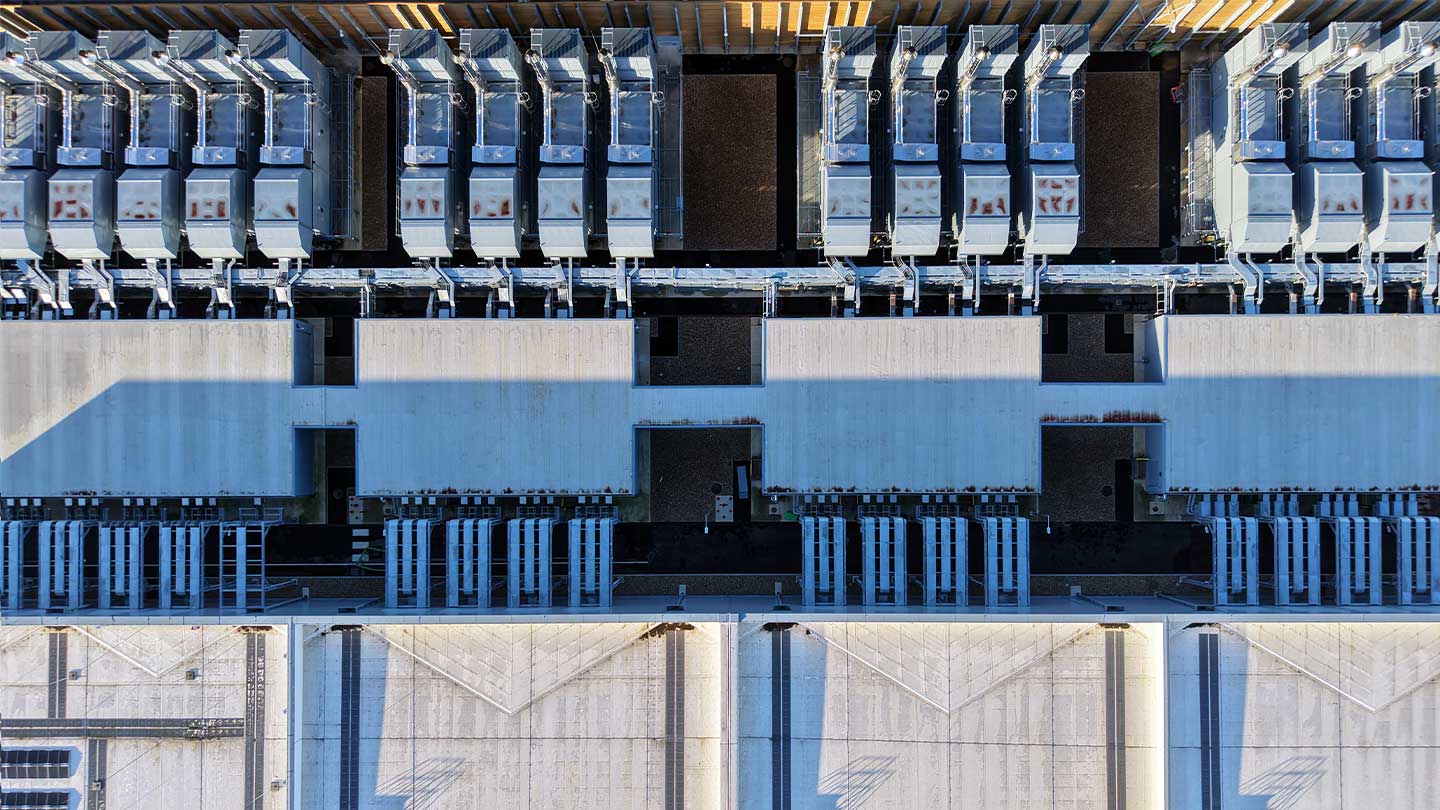
Alphabet raised its 2026 capex ceiling to $205 billion at second-quarter earnings, and Meta has lifted guidance twice this year, moves recorded by the ValueAddVC AI Spending Tracker on August 11. Each fears being the one whose model falls behind, because losing the model race costs the cloud franchise itself.
Amazon carries the single largest budget at roughly $105 billion to $120 billion of 2026 guidance, ahead of Microsoft at $80 to $90 billion, Alphabet at $75 to $85 billion and Meta at $65 to $72 billion, by Buildermuse's July 2026 hyperscaler capex analysis. Nvidia wants the orders to keep coming and projects total industry spending approaching $1 trillion by 2027, a projection remio.ai cited in 2026. The utilities and grid operators, who never asked for this demand curve, absorb it on decade-long timelines they do not control.
Big Tech's AI infrastructure debt hit $159 billion in 2026, more than in all of last year, according to wealtharian's August 2026 analysis. The five big spenders will devote about 90 percent of their operating cash flow to AI data centers this year, up from a historical average around 40 percent, a ratio Tomasz Tunguz calculated from industry filings in 2026.
Some of the borrowing does not even appear as debt: 24/7 Wall St. reported on August 22 that Meta's Hyperion campus in Louisiana carries about $27 billion of borrowings held by a joint venture majority-owned by funds managed by Blue Owl Capital, with Meta as tenant and minority partner, keeping the liability off Meta's balance sheet.
Oracle's large new data-center leases run fifteen to nineteen years, obligations that a WhatJobs News reconstruction published in August 2026 suggests sit outside the headline debt figures.
In the late 1990s, telecom carriers like Global Crossing and WorldCom borrowed tens of billions to lay long-haul fiber, guided by the same logic that demand would catch up to any capacity built. They went bankrupt, but the dark fiber they left behind was later bought for cents on the dollar and became the physical foundation of the modern internet.
What differs now: the fiber of 1999 did not depreciate, while GPUs written into today's data centers carry useful lives companies book at roughly six years against chip generations arriving every twelve to eighteen months. Silicon Analysts estimated on July 10, from reported cash-flow statements, that the four hyperscalers bought about $434 billion of property and equipment in the four quarters through March 2026 while reporting only around $149 billion of depreciation over the same span, a gap that must eventually close.
American railroads in the nineteenth century argue the optimists' case. Overbuilt twice and bankrupting investors repeatedly, they left behind cheap freight capacity that powered a century of industrial growth. If AI follows that path, today's record budgets buy national infrastructure that society keeps even if early owners lose. Railroads had captive local monopolies once built, while rented GPU capacity competes against next year's cheaper, faster chips, and the revenue line depends on customers who are themselves burning venture and borrowed money to buy tokens.
The suppliers collect now
The suppliers collect now — Nvidia, TSMC, the construction and turbine trades, the independent power producers signing long contracts. Bondholders inherit the risk as equity holders' cash cushions empty, and the credit spreads on data-center-backed paper start pricing a business whose cash flows depend on token prices nobody has defended in a downturn.
If AI revenue disappoints, the losses do not stay inside the tech sector, because Robeco's point holds — this bond supply competes with governments for the same buyers, so a wave of downgrades lands on top of fiscal deficits and lifts every borrower's cost, as Bloomberg reported on August 19. Apple, notably, hits all-time highs partly by standing aside, generating cash while rivals compress theirs, as TechTimes noted on July 14.
The confirmations include more Blue Owl-style joint ventures moving data-center debt off balance sheets, wider spreads on the new AI infrastructure bond issues relative to the parents' existing senior paper, and further free-cash-flow declines at Amazon and Alphabet in upcoming quarterly reports. The falsifier is simpler. If AI revenue growth catches up to the spending curve — if cloud and token revenues grow toward the depreciation rather than away from it — then negative free cash flow is just investment timing, and the credit alarm was noise.
If it breaks, the consequence does not land on the executives who approved the campuses; their compensation vests long before depreciation does. It lands first on the pension and insurance portfolios buying the long-dated bonds at thin spreads, then on the towns like those in Louisiana hosting campuses financed by entities that can restructure without their anchor tenant's name on the loan. The chips get replaced, the shells get refinanced, and the people holding the paper at par find out who actually owned the risk.
The question is no longer whether artificial intelligence works but whether this scale of annual spending can be deployed profitably by anyone, which history answers far less kindly.