Sanctions stripped Iran’s tankers of insurers, leaving Gulf spills with no claimants
The Gulf’s aging fleet now sails without insurance or names, and three oil slicks spread as war drives ships dark.
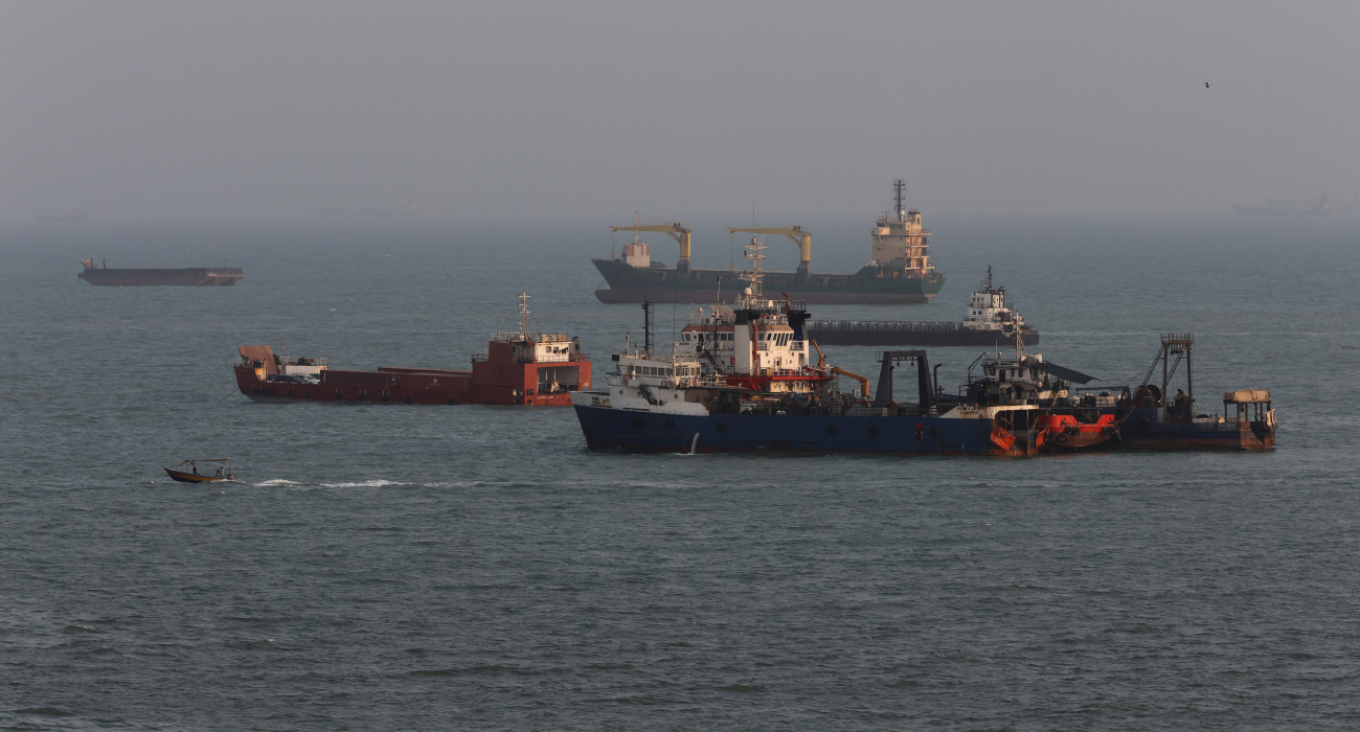
Eighty percent of the ships moving through the Strait of Hormuz these past two weeks are doing it dark, with transponders off, hugging Oman's coast, and staying out of Iranian waters, according to Kpler data published by Protothema on August 22.
At the same time, maritime security experts tracked three oil slicks spreading through Gulf waters, including one bleeding crude from a half-sunken tanker toward Oman's turtle beaches, according to SupplyChainBrain on august 21. The tankers going dark and the tankers coming apart may be the same fleet: a shipping system built on the promise that someone will pay when a hull breaks is now running on ships that promised no such thing.
This contradiction was manufactured, not accidental. For years, the U.S. Treasury’s Office of Foreign Assets Control sanctioned Iran’s oil tankers vessel by vessel — CrewMirror reported that one round hit twenty-nine ships and their operators, following earlier actions in January from the U.S. Treasury press release that designated nine vessels plus their managers, according to Jan 23 on 2026. Designation sounds like paperwork but in shipping it is exile: a sanctioned ship loses its P&I club entry, its charterers’ certificates, its port state welcome. The sanctions policy worked exactly as written and Iran’s exports kept flowing. What changed is who stands behind them.
In late February, U.S. and Israeli strikes on Iran opened a war in the strait itself, as reported by Beinsure, citing the events of February 28. War-risk premiums surged twelvefold — from about a quarter percent of hull value to three percent — and London underwriters widened the high-risk zone across the entire Gulf (Beinsure, Aug reporting). Compliant owners did the arithmetic and many stopped sailing or sailed dark themselves. The slower pressure underneath is older. A decade of sanctions turned Iran’s trade into a parallel fleet of aging ships under flags of convenience, owned through layers precisely so no name attaches.
That fleet is now the main artery for Iranian exports. The World Ports Organization, citing transit data, found that ships carrying Iranian-origin oil made up about fifteen percent of Hormuz transits in late February and more than eighty percent after the war closed the compliant lane. Since March 1, Kpler counted 1,514 dark crossings in and out of the Persian Gulf, a figure cited by SupplyChainBrain on August 21. Iran wants its oil revenue and its leverage, China's refiners want cheap barrels, and the shipowners in the middle want fees large enough to die for. Everyone in the chain has an incentive to keep the lights off.
June showed the result when the Front Eagle, run by Norway-listed Frontline, collided with the Adalynn, an Antigua-flagged dark-fleet tanker, off Khor Fakkan; both caught fire and twenty-four crew were evacuated, according to FreightWaves on june 17. Frontline chief executive Lars Barstad told the Marine Money conference his company could not even locate the Adalynn’s owner to discuss the casualty, as reported by the World Ports Organization on June 18. That sentence is the whole story. When the insured ship hits the uninsured one, the bill goes looking for a ghost.
Oman is already collecting on that ghost debt. The Caroline Bezengi, a sanctioned tanker believed to have been carrying Russian crude, ran aground off Dhofar in early August and leaked oil onto the Hallaniyat Islands, with oil reaching the mainland coast by August 13 according to Muscat authorities, according to Euronews on august 13. Jerusalem Post’s August reporting notes that a slick has also reached Qeshm Island's mangroves inside Iran. Salvors face a casualty with opaque ownership, no recognized insurer, and a cargo nobody will claim; cleanup costs fall to Oman's government and fishermen first, and lawsuits may never find a defendant.
The old way and the new
From 1984 to 1988, Iran and Iraq attacked merchant shipping in the Gulf for four straight years — then, the ships stayed visible. Lloyd’s repriced every transit, navies escorted convoys, and the market absorbed the cost because ownership and insurance could be traced to a name and a pocket. The difference now is that sanctions spent ten years teaching Iranian oil to travel untraceably. When the shooting started, the risk had nowhere priced to live.
The counter-case is found in the Baltic: Russian shadow-fleet casualties there eventually drew enforcement operations rather than indifference, suggesting that pressure builds once coastal states start paying.
After the collision
Walk the chain forward. First, dark traffic keeps oil moving and prices from spiking, which suits Tehran, Beijing and import-dependent economies. Second, collisions and spills multiply in an unlit lane, and coastal states — Oman, the UAE, Iran itself — absorb wrecks they cannot bill. Third, if one dark VLCC breaks up on a major shoreline, governments that tolerated the gray fleet may demand registries, insurance proof, and port bans, and the same ships get squeezed from the other side.
The scrapyard is already taking calls, with twenty-six dark-fleet vessels sent for recycling so far this year, according to Clarksons Research as cited by Riviera Maritime Media in 2026.
Who profits and who pays
Who profits is equally concrete. Legitimate owners able to insure earn scarcity rents on the compliant route, and new Hormuz capacity exists because someone must write the risk — Lloyd’s launched a dedicated underwriting consortium for strait transits in June with Chubb leading, according to a Lloyd’s announcement published by the trade press on June 19. Meanwhile, China’s refiners buy discounted barrels at the cost of spills they will not pay to clean. The profit sits upstream of the damage.
The debate is already underway among tanker executives, as Gulf Bunkering recently reported, about whether these ships could re-enter the legitimate market now that a deal has reopened the strait. If a settlement includes delisting and reinsurance, the dark fleet becomes a rounding error instead of a liability.
Watch for confirmation. Another major casualty with no reachable owner, or Oman and the UAE formally barring uninsurable tonnage from their ports. Either would signal which way the ledger tips.
The people holding the consequence are not in Washington or Tehran. They are Omani fishermen along the Hallaniyats, salvage crews asked to board a burning ship whose owner cannot be found, and seafarers from South Asia crewing hulls their own flag states barely recognize.
Sanctions meant to strand Iran’s tankers succeeded — but they stranded them outside the insurance system, where the sea collects debts in oil and turtles instead of dollars.