SK Gas and SK Shipping bid against each other for the same berth
The queue became an auction, and one Korean family of companies has now paid both records for jumping it.
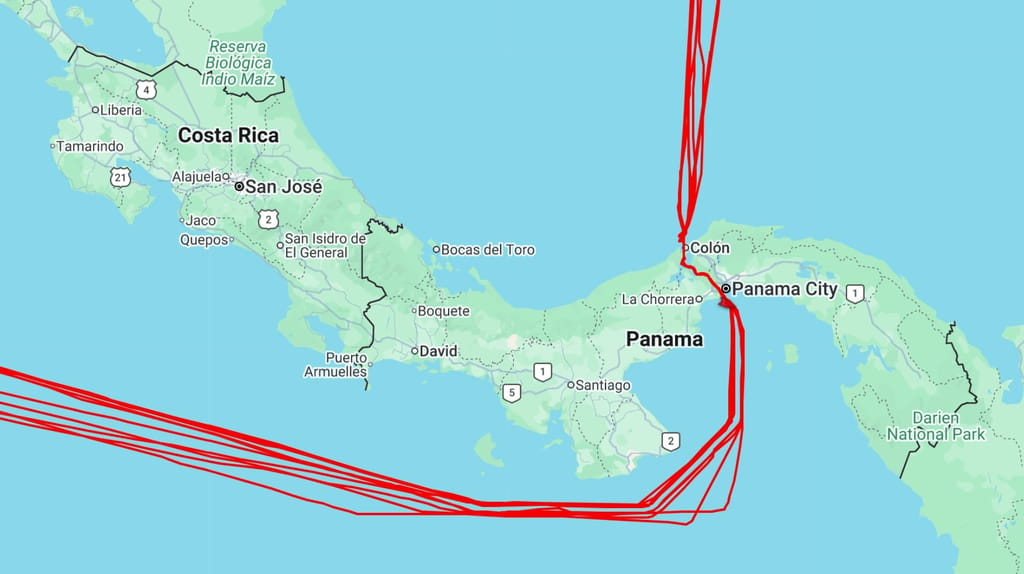
The gas carrier G. Spirit waited on the Pacific side of the Panama Canal this week as its owners debated the value of a day. Bloomberg reported on August 25 that they settled on $5.3 million, the sum paid in a canal authority auction for one northbound transit scheduled for September 1.
What is at stake is the distance between SK Gas, which owns the cargo and controls almost a third of South Korea’s domestic LPG market, and SK Shipping, which manages the vessel. PortNews on August 26 reported that SK Gas’s terminals at Ulsan and Pyeongtaek store 480,000 tonnes, while SK Shipping’s management covers the Panama-flagged, 54,502 deadweight tonne vessel. When available slots shrink, the cargo and hull holders bid against the same deadline; whichever entity wins, the cost appears inside one group’s accounts.
SK Gas had built its Ulsan and Pyeongtaek terminals expecting US Gulf LPG to arrive via Panama in about three weeks, based on the assumption that the route—cheap American propane, one short canal, Korean crackers waiting—would remain open and affordable. The canal was never treated as a risk factor, but as infrastructure taken for granted.
After the Iran war diverted Middle East trade from Hormuz to the Cape, Bloomberg cited Argus Media data on August 25 showing that unreserved US Gulf ships began waiting as long as 11 days at Panama, compared with a median auction price near $55,000 before February. Earlier this month, a related SK Shipping ship, G. Arete, set a new transit auction record at $4.6 million, according to Bloomberg on August 25; SK Gas broke that record just weeks later with its $5.3 million bid.
The canal’s shortage is not a function of margin—just water. PortNews reported on August 26 that rainfall across Panama’s watershed from May to August was 34 percent below the historical average, with inflows down 44 percent. The canal authority will reduce Neopanamax lock slots to nine per day from September 4, only one of which will be an auction slot. Administrator Ricaurte Vásquez told reporters that El Niño should persist for eight months, during which every drop is essential, according to gCaptain on August 26.
A rule published on August 25 quietly assigned LNG ships first priority for reallocated slots, with LPG carriers second, as described by PortNews. That queue means bulk carriers, car transporters, and containers wait behind ships carrying gas the Korean sector cannot substitute or stockpile—Ulsan’s tanks are meant to smooth seasonal flow, not reroute supply chains.
The auction number reveals only what can be paid. Every record bid is made by a shipper who can afford it, casting the sum as the canal’s price. The true cost is shouldered by those further back in the line, smaller traders with no balance sheet like SK’s, who pay demurrage that never posts to an auction ledger. The auction shows the visible tip; the exposure spans the remainder.
For SK Gas, consequences move quickly: missing a berth idles both cargo and terminal within days. For the canal, change is slow: drought cannot be outbid, and rationing decisions made before August shape what happens in September. New measures now will not make rain.
The closest precedent is 2023’s El Niño, when the canal cut transits and auction premiums leapt from thousands to hundreds of thousands of dollars, then retreated with the return of rains, as intelliNews reported in August 2026. The counter-case is that in 2023, weather was the only constraint; today there is both an eight-month drought and redirected Middle East and US Gulf gas traffic, so the surge will not fade when the weather does.
The immediate impact lands on Asian propane buyers: SK Gas’s auction number will be cited at every contract negotiation. Shipowners like SK Shipping and BW LPG feel it next, as freight rates take on a Panama premium. Ultimately, those holding LPG inventory in queues they cannot afford to exit bear the largest cost.
Korea’s gas market has just discovered that its cheapest dependency is now its costliest. The $5.3 million bought one safe day for one ship. The drought it is running from lasts at least eight months more.