Shippers pay millions in secret Panama Canal slot auctions
Public tolls no longer determine who transits Panama first; ships now win passage by bidding far above official surcharges in rarely published auctions.
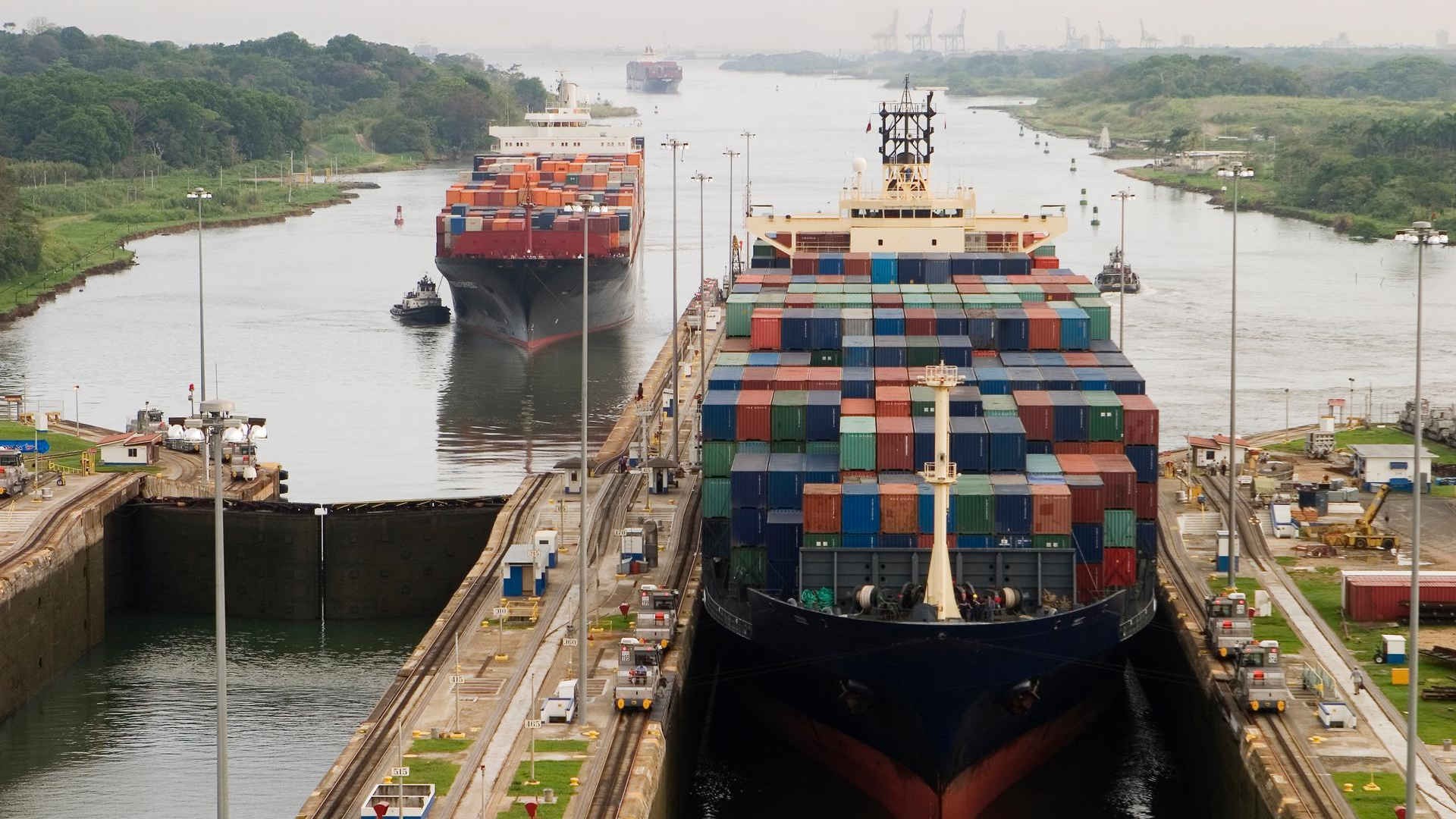
On August 14, Bloomberg reported, the LPG carrier G. Arete paid a reported 4.6 million dollars for the right to move through the Panama Canal ahead of roughly a hundred ships waiting their turn.
Four days earlier, the containership Seaspan Benefactor paid about 4 million dollars for the same privilege, more than double the average winning bid of the prior week, according to Bloomberg on August 11. Both payments sat on top of ordinary canal tolls. Neither appears on any carrier's published tariff sheet, because neither is a tariff at all.
CMA CGM this week told customers it would add a Panama Canal Adjustment Factor of 500 dollars per container on Asia-to-US East Coast cargo from September 10, a number any shipper can read before booking, according to ICIS on August 21. That same week, Argus Media's weekly auction data showed the average winning bid at the Neopanamax locks' auction ran about 2.5 million dollars per transit, and about 1.1 million dollars at the older Panamax locks, for the week of August 3 to 9. The filed surcharge is a rounding error beside what access actually cleared for. Published prices describe a market that no longer exists.
The water did not show up. The Panama Canal Authority had spent most of 2026 insisting normal operations could hold through year end; gCaptain reported on August 21 that its administrator said in April nothing significant was anticipated before December. Rain across the watershed failed anyway.
On August 21 the authority cut daily transits from 38 to 34 slots effective September 3, then to 32 from September 15, pushed the Neopanamax draft down toward 48 feet, and announced an overhaul of the auction itself, splitting bidders into four sector groups from LNG carriers to tankers so no single trade could buy up everything, as reported by ICIS and gCaptain on August 21.
El Nino is the reason. NOAA's Climate Prediction Center put an 81 percent chance the event reaches very strong status by October and a 97 percent chance it persists into spring 2027, in the July seasonal outlook carried by gCaptain.
The 2023-24 drought already taught the shipping world that a canal slot can become a commodity, when Japan's Eneos Group bid 3.975 million dollars for the LPG tanker Sunny Bright in November 2023, according to OPIS.
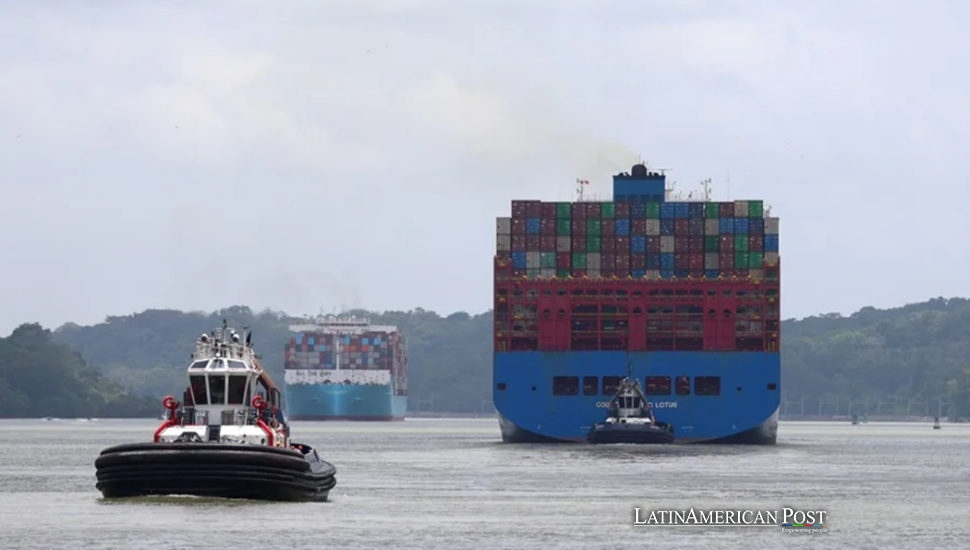
Since then, who competes has changed. Security around the Strait of Hormuz and attacks near Bab el-Mandeb have rerouted energy and container flows onto longer paths, some of which run through Panama. Gas tankers bound for the US Gulf now bid against container lines for the same nine daily Neopanamax slots, ShipUniverse reported on August 12. Around 110 vessels were waiting during the week of August 10, and unreserved Pacific-to-Atlantic ships faced waits near ten days, by the Panama Canal Authority's daily queue reports from mid-August.
The 1970s oil queue
When a physical good is rationed below its market-clearing price, the difference does not vanish; it migrates to whatever allocation mechanism sits closest to the constraint. In the 1970s that meant gasoline lines and spot premiums over posted prices. Now it is a sealed-bid auction layered on top of a toll schedule written years ago. The posted price holds the politics together, and the secondary market does the rationing. What differs is that Panama's auction revenue flows to a state authority rather than to resellers, which softens the incentive to widen the gap, though not the gap itself.
The canal's own numbers argue this is manageable. In the first half of fiscal 2026 it handled 6,288 transits, up 224 from the prior year, with volumes up about 5 percent, according to the authority's fiscal-year report carried by gCaptain on August 21. Better rainfall briefly let officials delay the harshest draft cuts by weeks. And the auction overhaul, by grouping bidders by sector and giving full containerships priority at the Neopanamax locks, is a deliberate attempt to stop gas money from evicting boxships. A reader could reasonably conclude the system bent without breaking.
But the counterexample fails where it matters, at the invoice. A carrier that wins a slot at auction cannot recover that cost through its filed tariff, because tariff filings are public, uniform, and politically visible, while auction bids are neither published in full nor attributable. Bloomberg reported on August 11 that the Panama Canal Authority declined even to confirm the Seaspan Benefactor payment.
So the cost leaks sideways, into surcharges like CMA CGM's adjustment factor that approximate last quarter's reality, and into contract rates negotiated quietly between giants. The small shipper on a fixed annual rate pays the published number while his competitor pays the real one and gets the berth window. The auction sorts customers.
The winners and the payers
The winners name themselves. The canal authority collects auction revenue on top of tolls, and has every incentive to keep the reserved-slot share tight enough that bidding stays lively. Large carriers with long-term slot allocations and deep pockets convert cash into schedule reliability their smaller rivals cannot match, and Gemini partners Maersk and Hapag-Lloyd are meanwhile restoring Suez sailings, adding another demand stream through Panama if security deteriorates again, as ShipUniverse noted on August 12. The payers are the mid-size shipper and eventually the consumer, through landed costs that rise by way of surcharges calibrated to a price series nobody publishes.
If the read is right, the September 3 auction reform will not cool the market, because four sectors bidding separately against 34 daily slots is still scarcity. Watch whether average Neopanamax winning bids stay above a million dollars once the new rules take effect. If it breaks, bids collapse back toward the pre-crisis range of 135,000 to 140,000 dollars within weeks of steady watershed rain, the level officials themselves quoted for the period before the Middle East conflict, according to gCaptain on August 21. Water, not regulation, is the swing variable.
At Gatun Lake, the real clearing house here, every million-dollar bid is a bet that the rains fail, every reservation a claim on a reservoir serving half of Panama's drinking water along with world trade.
The canal can rewrite its auction rules as often as it likes. But it cannot publish a tariff on rain.