Treasury doubles long-bond buybacks as yields hit highs and private buyers stay away
The U.S. government is buying back its own long-term bonds just as private investors demand higher yields and avoid new auctions.
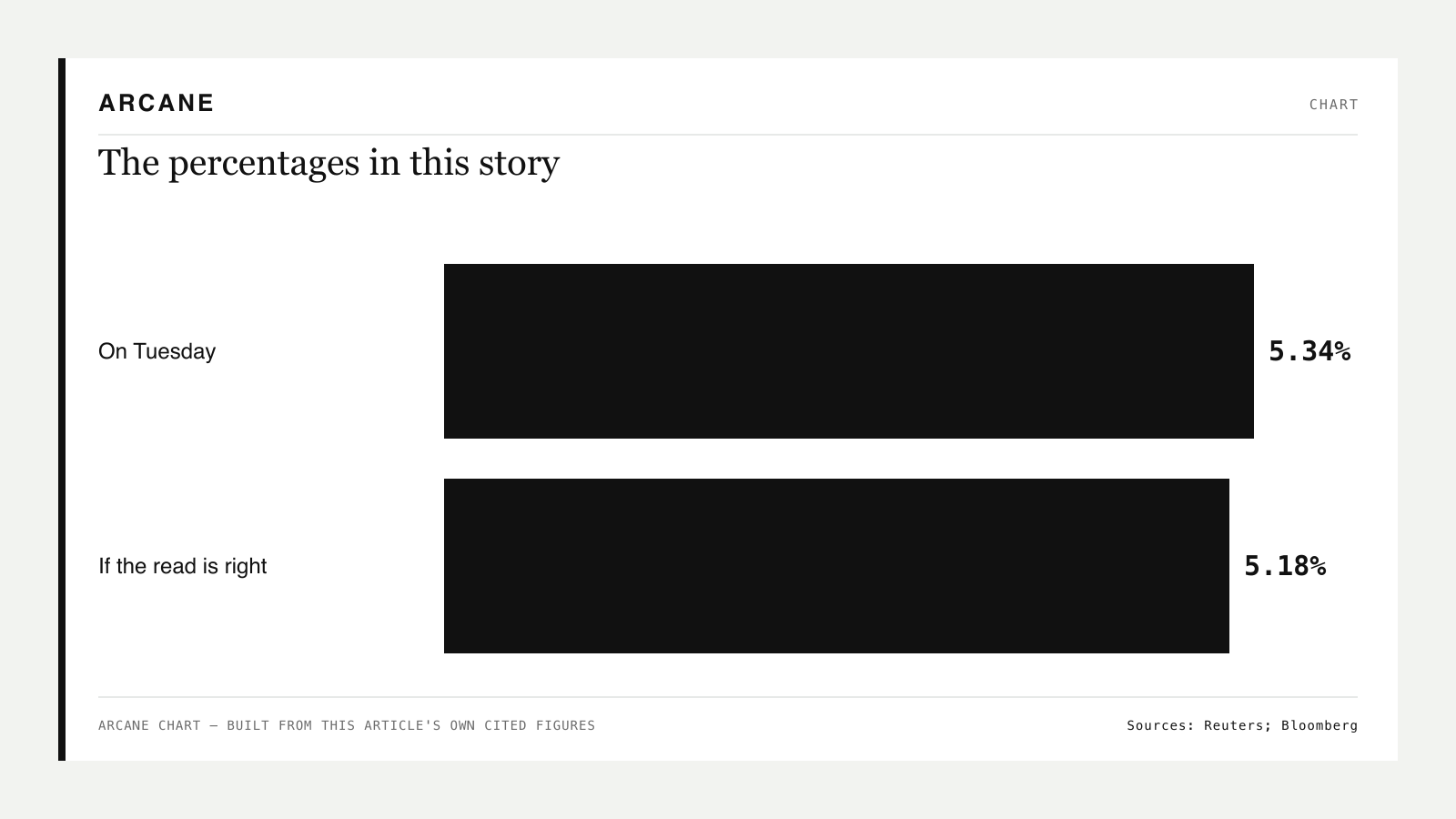
On Tuesday, August 18, the 30-year Treasury yield touched 5.34 percent, its highest since 2007, while the Treasury itself ran a scheduled two-billion-dollar buyback of 20- and 30-year bonds that same day — Reuters reported the pair on August 19.
The government was buying back its own long-term debt at the very moment private buyers were demanding more to hold it. By the next morning Treasury Secretary Scott Bessent had answered the selloff by doubling those operations, to at least four billion dollars each, every week from September 9 through November 4, as the Council on Foreign Relations noted on August 20. Both facts can exist for a while. They cannot both grow.
What is at stake is the interest bill on roughly thirty trillion dollars of debt and whether it eats the budget whole. Bessent runs the borrowing side of the United States government. Every point the 30-year yield climbs raises the price of every mortgage, every corporate bond, and every future auction, and he wants lower long rates without asking the Federal Reserve for help. The Fed wants no part of financing a deficit its own committee keeps calling unsustainable. The doubling was announced this month because the selloff arrived now; whether it can hold depends on buyers who have been refusing the long end for three years.
Bessent's targets are money market funds flush with cash from short-term bills, foreign reserve managers who have been slow to return, and borrowed-money funds that have treated long Treasuries as a losing trade for most of three years. CNBC reported on August 19 that the 10-to-20-year and 20-to-30-year parts of the curve have seen something close to a buyers' strike since late last year, which is precisely the segment Bessent chose to target.
The trigger was this month's selloff, driven partly by war risk feeding inflation expectations straight into long yields. The pressure underneath is older: Washington borrows more every quarter, refinances more of it at today's rates each year, and has leaned hard on short-term bills because bills are easy to sell. Reuters documented the pattern on July 23, reporting that Treasury ramped up bill sales as deficits grew, with money market funds absorbing nearly everything. That choice made this week's maneuver possible. It also makes it fragile.
There is no new money in the buyback. Treasury funds the purchase of long bonds by selling more short-term bills, so total debt does not shrink by a dollar; the average maturity gets shorter instead, Forbes explained on August 22. Rebecca Patterson, the former Bridgewater strategist now at the Council on Foreign Relations, called the doubling more signal than substance on August 20, noting that even doubled, the buybacks are small against the flood of overall supply, and pointing to oil near $91 a barrel with shipping constrained through the Strait of Hormuz as the war-risk premium now priced into long yields. A borrower rewriting its issuance plan mid-quarter because the market moved against it is not managing liquidity. It is defending a price.
Operation Twist in 1961 is the historical model here: the Kennedy administration and the Fed agreed to sell short bills and buy long bonds to flatten the curve without expanding the balance sheet. It worked modestly, mostly because the Federal Reserve stood behind it with real authority over bank reserves. That is what is different this time: the Fed is not participating. Bessent is running the twist alone, with a checkbook funded by bill issuance and no power to create money.
Who actually controls long rates
The counter-example argues strongly the other way. In September and October 2022, Britain's Treasury could not stop its own gilt crisis with words; the Bank of England had to intervene with actual central-bank purchases before yields came down. When a government's long-end market breaks, the treasury ministry alone has never been enough. Only the printing authority has ever been.
If the read is right, yields dip on announcement days and recover within sessions, and that already happened, with Bloomberg reporting on August 20 that the 30-year fell to about 5.18 percent on Wednesday before pushing back above 5.27 percent by Thursday afternoon.
Next, the bill mountain grows, and the day the Fed cuts short rates, money fund yields fall, the bill trade stops paying, and that cash goes hunting for duration, which would be the first genuine buyer the long end has seen in years. If that rotation stalls, the pressure lands where it always lands eventually, on the November 4 quarterly refunding announcement, where Treasury must either admit it needs more long-bond auctions or ask the Fed for help out loud.
The pain then moves to pension funds and insurers holding long bonds marked down for a third straight year, and to homeowners facing mortgage rates priced off a 30-year yield last seen before the iPhone existed.
The rest of the world
The rest of the world is not waiting politely. German ten- and 30-year yields hit fifteen-year highs and French ten-year yields their highest in eighteen years in the same week, The Economist reported on August 22. Europe's finance ministries are watching Washington's experiment closely, because if a treasury department can lean on its own long end with buybacks alone, they will copy it, and if it fails, everyone learns the same lesson about who actually controls long rates.
Speculative money has already voted with its feet elsewhere. Silver ripped nearly six percent in a single session after the announcement, and Bitcoin ran to $78,000, both classic trades against the purchasing power of a government leaning on its own bond market, as Money Morning and CoinDesk each reported on August 21.
The weekly buyback operations and the next long-bond auction will confirm or break the read.
If yields keep grinding higher between operations and the auctions tail, the desk has confirmed that a borrower cannot outbid its own creditors indefinitely.
What breaks it is a genuine bid returning from outside the government, most likely the money-fund rotation after Fed cuts, which would pull the 30-year back under five percent and make Bessent look like the man who timed the bottom rather than the man who papered over the top.