West Coast freight prices fall after ports avoid a strike
Importers still face high trans-Pacific freight costs, while carriers lose price power as more capacity enters the route.
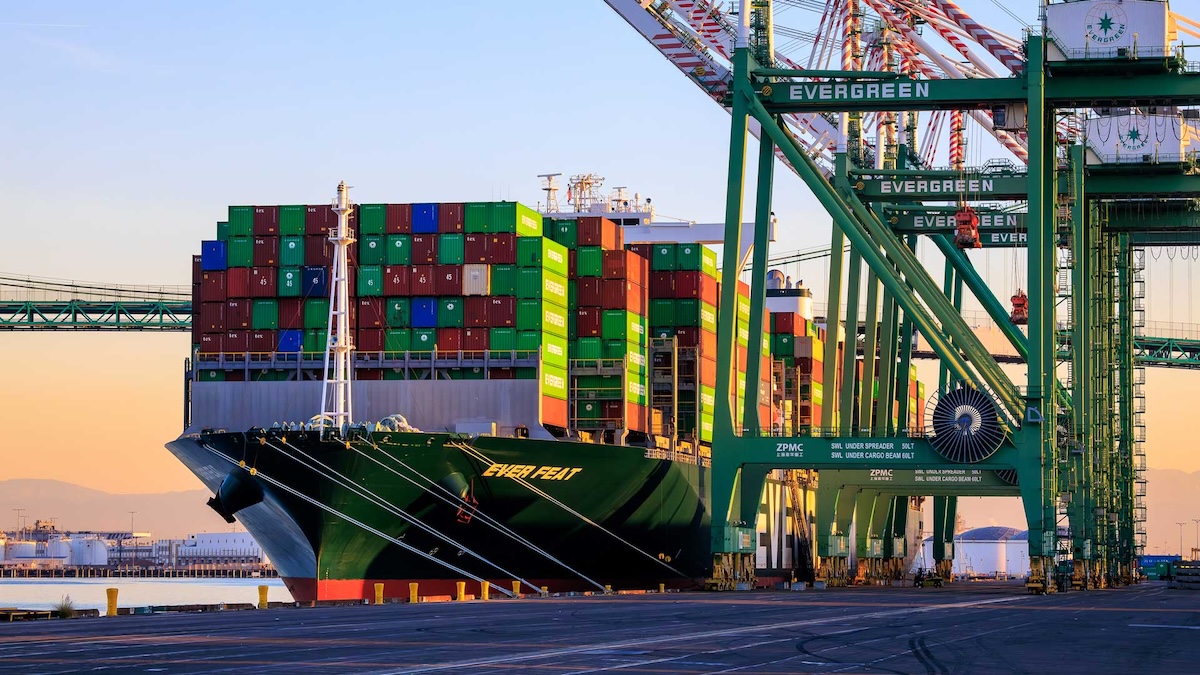
The avoided Los Angeles and Long Beach strike is not the main price signal in trans-Pacific shipping. West Coast prices fell 6% this past week to $7,985 per forty-foot container, even as FreightWaves reported on Nov. 25 that a tentative deal averted disruption at those ports.
The answer is less tidy than a single headline rate. Container News reported on Nov. 24 that Asia-US West Coast declined 4.07% to 7,553.66, compared with 7,874.07 in the previous assessment. Wisevoter's West Coast reading was $8,203 after a 1.7% drop.
Those readings disagree on the level and agree on the direction. That suggests the safer conclusion is not that one price has settled the market. It is that quoted West Coast freight has softened across public assessments, and the exact mark depends on the assessment used.
FreightWaves also put daily West Coast rates lower so far this week, but that faster reading does not erase the difference among the public marks. For a shipper, the difference between an index value and a daily quote can change a budget. For a carrier, the shared direction matters more than the last dollar printed.
FreightWaves reported on Nov. 23 that container shipping spot rates from Asia to the United States declined in the latest week as offered capacity increased on routes to both U.S. coasts. On four-week rolling averages, capacity from the Far East to the West Coast increased 10.9% from October 19, while capacity to the East Coast rose 11.4%.
That capacity evidence fits the price move better than a simple labor-relief story. A port strike risk being removed would normally take fear out of the market, but the quoted reports show falling rates at the same time that more space was being offered on the route.
The labor news still matters. FreightWaves said the market averted a possible strike at the Port of Los Angeles-Long Beach after employers reached a tentative contract agreement with watchmen represented by the International Longshore and Warehouse Union. The separate point is that the deal remains tentative until ratification.
A tentative agreement lowers the immediate disruption risk without closing the file. If ratification fails, the same public freight assessments would be the place to look for a revived port-risk premium. Until that happens, the cleaner force in the evidence is the increase in offered capacity.
Capacity also widened beyond the direct Asia-to-U.S. lane. Wisevoter said offered capacity increased on all Far East fronthauls to Europe and the U.S., softening spot rates even though transits through the Bab el-Mandeb Strait have fallen sharply. That makes the market look less like one port event and more like a broader supply response.
Who Still Pays?
Lower does not mean cheap. FreightWaves said falling trans-Pacific rates offer some relief after the holiday period, but the rates were still nearly triple last year's levels. In another account, the same outlet said trans-Pacific spot rates remained roughly four times their year-earlier levels.
Wisevoter put the cost pressure plainly: spot rates remain far above year-ago levels, so shippers and importers continue to face elevated freight costs. The first beneficiary of the fall is the buyer of freight space, but the bill remains high against last year's baseline.
The other side is the seller of that space. Container News described a freight market marked by persistent Transpacific weakness, mixed Asia-Europe developments and substantial differences between individual trade lanes. That is a poor setup for carriers relying on spot prices to hold up while offered space keeps rising.
Drewry's count, reported by Container News, makes the weakness look persistent rather than sudden: Transpacific spot rates have declined for seven consecutive weeks. FreightWaves reported that the agreement averts disruption at the ports of Los Angeles and Long Beach but remains tentative until ratification. That suggests the agreement did not create the rate decline by itself.
The labor case has evidence. The possible strike was averted, and the agreement is still conditional on ratification. It falls short as the main explanation because the quoted price declines arrived alongside increased offered capacity, while the public rate readings disagree on level but not direction.
A retailer or manufacturer that imports goods gets some budget relief if spot prices keep easing, though elevated rates still sit in the cost base. A carrier or freight seller faces the opposite pressure: weaker spot prices reduce pricing power unless capacity is withdrawn or cargo demand absorbs the added space.
The next check is the next public West Coast rate assessment. If the price falls or stays weak while offered capacity remains above its base, capacity remains the better explanation; a ratification failure followed by a rate rise would break it.
What followsConditional research · not advice
From the storyIt averts disruption at the ports of Los Angeles and Long Beach, but the deal is tentative until ratification.1 link later: a hypothesisThe capacity explanation holds if the next public West Coast spot-rate assessment falls or stays weak while offered capacity remains above its October 19 base.
Why it is not the obvious read
On the quoted evidence, the tentative deal at Los Angeles and Long Beach is less important for current trans-Pacific spot prices than the added capacity on Asia-U.S. routes.
Based on four-week rolling averages, capacity from the Far East to the West Coast increased 10.9% from October 19, while capacity to the East Coast rose 11.4%.
BottleneckContainer shipping spot rates from Asia to the United States declined in the latest week as offered capacity increased on routes to both U.S.
AssumesIf added offered capacity on Asia-U.S. routes continues to be the main pressure on the next West Coast spot-rate assessment.
The capacity explanation holds if the next public West Coast spot-rate assessment falls or stays weak while offered capacity remains above its October 19 base.
The bottleneck
Based on four-week rolling averages, capacity from the Far East to the West Coast increased 10.9% from October 19, while capacity to the East Coast rose 11.4%.
Who is exposed
On the quoted evidence, importers still face elevated freight costs even after the latest fall, while sellers of freight face weaker spot prices.
What to watch, how long it must last, where it breaks
What to watch
- Link 1
A public West Coast spot-rate assessment would fall or stay weak while offered capacity remains above its October 19 base.
How long it must last
- Link 1
By the next public West Coast spot-rate assessment.
Where it breaks
- Link 1
The capacity-led test would fail if the next public West Coast spot-rate assessment rose while offered capacity did not remain above its October 19 base.
What would change it. A higher West Coast price tied to a failure of ratification or renewed port disruption risk would break the capacity-first reading.
Sources
freightwaves.com Nov. 25, Nov. 23container-news.com Nov. 24wisevoter.comtheloadstar.com Nov. 24
19 statements, each tied to its sourceWhat each statement rests onHow ARCANE checks a story