Trump’s Iran remark lifts oil and pressures stocks
Brent traders, bond holders and stock funds are exposed because the market moved before a tanker claim had outside support.
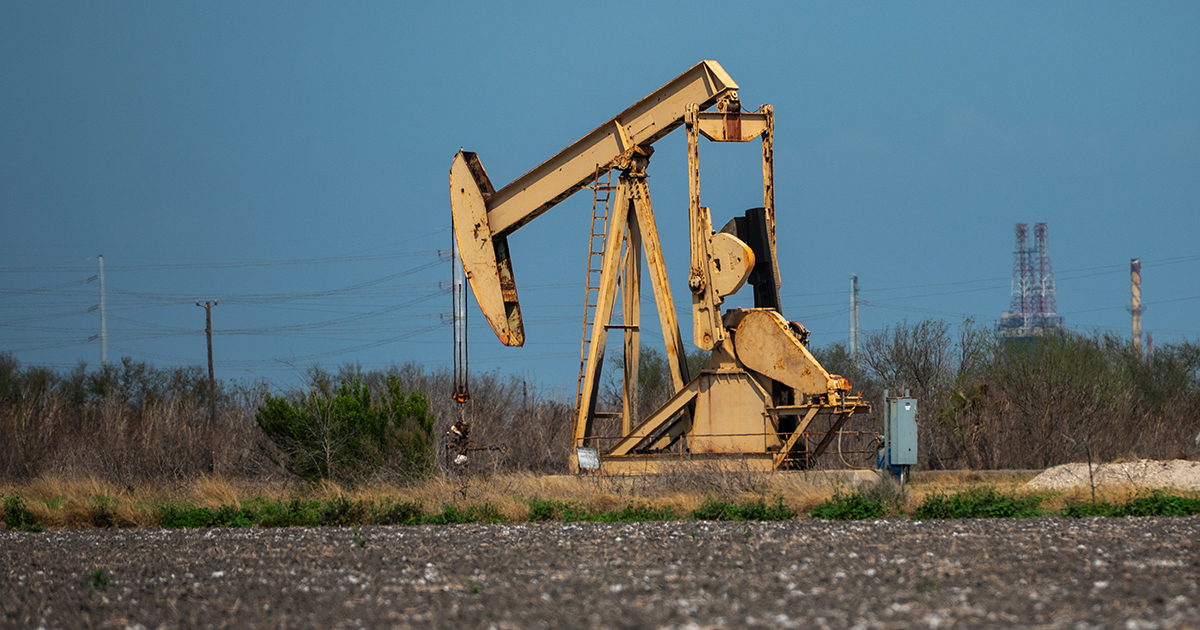
Oil’s rebound looks less like a confirmed supply shock than a diplomacy premium priced into a jumpy Brent market. Transport Topics reported on Nov. 12 that Brent suddenly went from about $92 to more than $94 after President Donald Trump’s post, before it later eased back.
The market response crossed from crude into stocks and Treasury yields. Transport Topics reported that stocks felt pressure after President Donald Trump said he was no longer interested in a deal with Iran, briefly sending oil prices, inflation worries and Treasury yields higher. Arkansas Online separately reported that stocks broadly felt pressure from rising oil prices after his remarks.
The first price move was small next to the recent Brent range, but it landed in a market already trained to mark up risk fast. Arkansas Online reported that the most actively traded contract in the Brent market has been veering sharply since the United States and Israel began the war with Iran in late February, bouncing between roughly $70 and $120.
Trump’s own words gave traders the signal. Transport Topics quoted him saying, “We don’t need a deal with Iran,” on his social media platform. The same outlet reported that his rhetoric marked a shift in tone from recent efforts to pursue a diplomatic resolution, while Iran had also indicated a tough stance.
That is enough to reprice risk, but not enough to prove a shortage. FXEmpire reported that President Donald Trump described a deal with Iran as unnecessary and that the Iranians claimed four tankers were struck in the Strait of Hormuz, but Reuters could not verify the tanker claim.
The difference between a price move and a supply loss is the trade in this story. A verified interruption would threaten barrels; an unverified threat changes what traders pay for insurance against a later interruption. The current public record supports the second reading more than the first because the reported physical-damage claim still lacks Reuters support.
TradingKey reported that renewed concern over disruptions to Middle East crude supplies fueled a sharp rebound in international oil prices. FXEmpire reported that Iranians claimed tankers were struck in the Strait of Hormuz, but said Reuters could not verify that account. Supply fears fit the direction of the price move; the reported strikes remain unconfirmed.
The concession ends where verification would have to begin. FXEmpire did not report that tankers were struck as an established fact; it reported the Iranians’ claim and Reuters’s inability to verify it. On the available record, the oil move is priced fear first and confirmed damage second.
That distinction changes who is exposed. A refiner, a shipper or an airline would pay differently for a physical shortage than for a headline premium that fades; the sources here establish the headline premium and the market reaction, while the tanker claim remains short of outside support.
The U.S. Energy Information Administration line available for this story does not give a current supply test for the rebound. It says supply data are as of October 24, 2025, and retail prices are as of October 27, 2025, which makes it a poor guide to the reported move.
The Market Response Crossed From Crude Into Rates
The bond-market channel is already visible in the cited reports. Arkansas Online reported that higher oil prices push up worries about inflation and that the yield on the 10-year Treasury jumped from 4.98% late Tuesday to 5.12%. That move turns an oil headline into a rates problem.
For a household, the pressure is not an abstract barrel price. The same reports tie higher oil to inflation worries, so a person with a mortgage, a savings account or a pension fund would feel the move through rates and living-cost expectations before any tanker-damage report settles.
Broad stock funds and holdings sensitive to interest rates face the immediate pressure. Arkansas Online reported that stocks broadly felt pressure from rising oil prices after President Donald Trump said he was no longer interested in a deal with Iran. Transport Topics reported that inflation worries and Treasury yields briefly jumped after his remarks. If the oil-price surge fades, that pressure can ease; a supported supply disruption could prolong it.
Equities did not trade as if oil had already broken the market. Arkansas Online reported that the stock market shook Thursday but largely absorbed big swings for Nvidia (NVDA) and oil prices and finished with relatively modest losses. That is consistent with a shock being priced, tested and partly absorbed, not yet treated as a settled rupture.
Gold-market coverage pointed in the same direction without settling the oil question. TradingKey framed October PPI as key to the gold trend as US-Iran talk prospects dimmed, which shows the inflation and diplomacy channels were running through more than crude. It does not prove a supply hit.
The next move is a coordination problem among traders, officials and news services. Trump has little incentive to soften a public no-deal stance unless diplomacy offers a better payoff; Iran has little incentive to sound flexible if pressure raises the market cost for its opponents. Traders, meanwhile, need only buy protection before proof arrives.
Brent’s price and confirmation of tanker strikes can separate the explanations. Brent staying firm while Reuters still cannot verify the tanker claim would support the diplomacy-premium reading. A Reuters-backed report of tanker strikes in the Strait of Hormuz, or a fall back below the level before Trump’s post, would move the story toward supply damage or a fading premium.
With no scheduled diplomatic date in the cited records, the test is bounded rather than calendared. Over the next 30 days, the cleaner signal is whether Brent can hold its post-comment gain without a Reuters-supported tanker strike report; that would keep this as a price for risk, not a receipt for lost supply.
What followsConditional research · not advice
From the storyThe strongest case against the diplomacy-premium reading is that traders were reacting to possible Middle East crude supply disruption.2 links later: a hypothesisIf oil-linked Treasury-yield pressure persists, broad stock funds and rate-sensitive portfolios can keep facing pressure through the same oil, inflation-worry and Treasury-yield channel.
Why it is not the obvious read
The tanker report limits the supply-shock case because the claim was attributed to the Iranians and Reuters could not verify it.
Oil’s rebound looks less like a confirmed supply shock than a diplomacy premium priced into a jumpy Brent market.
The rates exposure comes from the same oil move because the cited reports link higher oil prices with inflation worries and a jump in the 10-year Treasury yield.
AssumesThe oil move continues to be interpreted through the Iran-deal channel rather than through a verified physical supply interruption.
If the oil move continues to be read as a diplomacy premium, oil-linked inflation worries can keep Treasury-yield pressure tied to the Iran-deal channel rather than only to an equity-specific shock.
Households would notice the move through inflation worries, while broad stock funds and rate-sensitive portfolios would notice it through stock pressure and Treasury yields.
AssumesTreasury-yield pressure remains linked to oil-driven inflation worries.
ExposureIf oil-linked Treasury-yield pressure persists, broad stock funds and rate-sensitive portfolios can keep facing pressure through the same oil, inflation-worry and Treasury-yield channel.
The bottleneck
If Brent stays firm without a Reuters-supported tanker strike report, the move remains more consistent with a diplomacy premium than a confirmed physical disruption.
What to watch, how long it must last, where it breaks
What to watch
- Link 1
Brent stays firm while coverage keeps tying the move to inflation worries and Treasury yields.
- Link 2
Broad stock funds and rate-sensitive portfolios continue to be described as pressured by the oil, inflation-worry and Treasury-yield channel.
How long it must last
- Link 1
By the next round of oil, inflation and Treasury-yield coverage after the accepted article.
- Link 2
After oil-linked Treasury-yield pressure is discussed in later market coverage.
Where it breaks
- Link 1
Coverage shifts the oil move mainly to a verified physical disruption rather than to the Iran-deal channel.
- Link 2
Later market coverage separates broad stock pressure and rate-sensitive portfolio pressure from the oil and Treasury-yield channel.
What would change it. Brent falls back below its level before Trump’s posting or Reuters reports support for tanker strikes in the Strait of Hormuz.
Sources
ttnews.com Nov. 12fxempire.com Nov. 13arkansasonline.com Nov. 13tradingkey.com Nov. 13U.S. Energy Information Administration Oct. 24, 2025
23 statements, each tied to its sourceWhat each statement rests onHow ARCANE checks a story