Insurers demand premiums above freight rates for ships crossing Hormuz
The cost of insuring a voyage through the strait has surpassed the earnings from the trip itself, reflecting mounting risks for vessel operators.
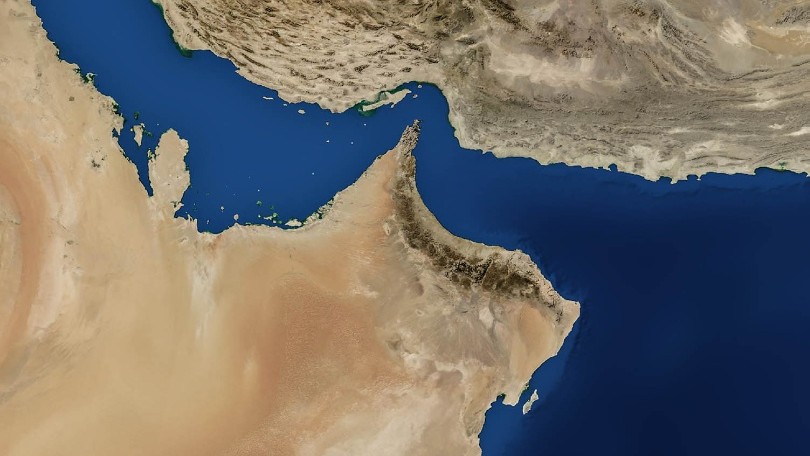
On Monday, a supertanker loading in the Persian Gulf for China could earn nearly $510,000 a day, the highest rate since late June, according to Bloomberg's August 18 report.
By Thursday, Kpler's trackers counted seven commodity vessels crossing the Strait of Hormuz all day, and not one of them was a very large crude carrier or an LNG ship — the count Ship Universe carried from Kpler tracking data on August 21.
Four days apart, the two numbers describe the same water. The charter market is pricing the strait as open; the ships themselves are staying out of it. The trigger is the collapse of the ceasefire between Iran and the United States, whose fragile sixty-day truce expired this week with no arrangement between Tehran and Washington over who controls passage through the strait. One of those readings is wrong, and by month's end the money will have found out which.
Bloomberg reported on August 18 that Iran had resumed striking ships in late June before the truce briefly held. Since then the International Maritime Organization's Middle East tally has reached sixty-six confirmed incidents against shipping and eighteen seafarer deaths, the count Ship Universe carried from the IMO incident tally on August 21.
Underwriters did not wait for diplomacy. Marine insurers grew so reluctant to write Gulf cover that brokers at Marsh reported premiums surging across Hormuz transits well before this week's breakdown, as S&P Global noted on July 22 in quoting Marsh.
Who pays twice
Before the war, moving Iraqi crude to India cost roughly $2 million in freight for a two-million-barrel supertanker voyage; Ship Universe reported on August 21 that the same fixture recently printed at $23 million to $25 million.
On top of that, Bloomberg's August 18 fixture report put the additional war-risk premium on a Gulf loading at high single-digit percentages of the vessel's hull value, charged per transit and paid by the charterer. On a hundred-million-dollar hull that is several million dollars for one pass through the strait, more than the entire prewar voyage earned. A round trip can carry a premium bill larger than what the same ship made in a whole year of calm-water trading.
Who refuses
China's state carriers have refused. COSCO Shipping Energy and China Merchants Energy Shipping, which together used to carry about half of China's Middle Eastern crude imports, have avoided Hormuz and Bab el-Mandeb since late July, per the August 21 Ship Universe report. Into the gap steps a short list of risk-tolerant independents. Bloomberg reported on August 18 that the very large crude carrier Mongolia Prosperity, operated by South Korea's Sinokor Group, was fixed by the shipping arm of a Chinese refiner to load inside the Gulf on August 21 for $31 million for the voyage, or 570 Worldscale points. Several other supertankers were booked privately in recent days and simply vanished from tonnage lists without public terms, per the same report. The owners willing to cross now hold pricing power the tanker market has not seen in decades.
The buyers have no choice but to pay them twice, once in freight and once in cover. Exporters promised Asian customers barrels and must deliver them. Saudi Arabia is offering prompt cargoes from inside the Gulf while Iraq, whose own outlets are constrained, borrows capacity from the United Arab Emirates' national exporter ADNOC, itself a prolific shuttle trader through the strait and at times partnered with Sinokor — arrangements Bloomberg described on August 18.
Chinese refiners priced out of Gulf grades are substituting Brazilian and alternative Iraqi barrels, Ship Universe reported on August 21. Every substitution costs more, arrives later, or both.
The slow pressure
Kpler flow data reported by Ship Universe on August 21 showed the strait carrying about 20.9 million barrels of oil per day in the first half of 2025, while the pipelines that bypass it, in Saudi Arabia and the UAE together, can move only about 4.7 million.
Qatar's LNG has essentially no land route at all: about 11.4 billion cubic feet per day crossed in the first half of last year, more than a fifth of global seaborne gas trade, again per Ship Universe's August 21 figures. No amount of premium can build pipeline capacity in a quarter. That gap between what must move and what can detour is why underwriters can name almost any number and find a taker.
The tanker war of 1984
The tanker war of 1984 to 1988 is the bounded model: Iran and Iraq attacked shipping in the Gulf and Lloyd's war-risk premiums spiked, then collapsed within weeks of the UN ceasefire as capital rushed back into the market. War-risk pricing proved fast up and faster down once firing stopped. This time differs in one hard respect, the scale of the chokepoint's dependence. In the late 1980s the world had more spare pipeline and more spare non-Gulf supply than it does now, when Asian buyers took roughly eighty-nine percent of Hormuz crude in the first half of 2025, according to the August 21 Ship Universe report.
The case against pessimism also comes from 1988. Neither Tehran nor Washington profit from sinking neutral hulls indefinitely, and Reuters reported on August 22 that Iran has already begun granting passage to Iraqi tankers after repeated requests from Baghdad — a sign Tehran wants traffic moving under its own control.
The winners are the few operators with Gulf experience and hard nerves, chiefly Sinokor and its peers, plus the underwriters collecting premiums sized like ransom. The losers are everyone downstream: Chinese refiners paying a double toll on every barrel, Asian utilities waiting on Qatari cargo that is not sailing, and crews whose employers now ask them to steam through water where, by the IMO tally via Ship Universe on August 21, eighteen seafarers have already died this summer.
Iran bleeds too, its exports down to roughly 534,000 barrels per day this August from an average near 1.4 million last year, per Ship Universe's August 21 figures. The strangling reaches its own export book first.
For a reader with a brokerage account, the exposure runs through tanker equities and rates rather than the oil price alone. Owners with vessels inside the Gulf earn five figures per day per ship, while the cost stack shows up in refining margins and Asian gas prices; Brent has already pushed above ninety dollars and bunkers in Fujairah broke fourteen hundred dollars a tonne, per Ship Universe's bunker watch of August 19. The freight rate is the purest instrument here, and it is not investable directly, which is precisely why the listed owners with Gulf-exposed fleets trade at the pace of each ceasefire headline.
Confirmation would look like Kpler's daily transit count recovering toward the forty-five crossings a day recorded during the June truce (Kpler tracking data via Ship Universe, Aug 21), with VLCCs visible again on AIS — deterrence or diplomacy restored, insurability with it, and premiums deflating fast as they did in 1988. Another strike on a laden supertanker inside the strait breaks it, pushing the war-risk quote past ten percent of hull value, at which point even Sinokor's economics fail and Gulf loadings stop being merely ruinous and become impossible.
The market has not repriced a voyage. It has started selling tickets to survivors, and the last people able to refuse the fare are the sailors going through.